2.5 Cluster Components of Accelerated Infrastructure
What the exam tests
The major hardware components of an AI cluster — compute nodes (DGX systems), storage hierarchy, networking, and how they connect.
AI cluster architecture overview
┌─────────────────────────────────────────────────────────────────┐
│                     AI CLUSTER                                   │
│                                                                  │
│  ┌──────────┐  ┌──────────┐  ┌──────────┐  ┌──────────┐        │
│  │ DGX Node │  │ DGX Node │  │ DGX Node │  │ DGX Node │  ...   │
│  │ 8× GPU   │  │ 8× GPU   │  │ 8× GPU   │  │ 8× GPU   │        │
│  └────┬─────┘  └────┬─────┘  └────┬─────┘  └────┬─────┘        │
│       │              │              │              │              │
│  ─────┴──────────────┴──────────────┴──────────────┴──────       │
│               InfiniBand / Ethernet AI Fabric (E-W)               │
│  ──────────────────────────────────────────────────────────       │
│                                                                   │
│  ┌──────────────────────────────────────────────────────────┐    │
│  │             Parallel Storage (WEKA / Lustre / GPFS)      │    │
│  └──────────────────────────────────────────────────────────┘    │
│                                                                   │
│  ─────────────────────────────────────────────────────────────   │
│               Management / Control Network (N-S)                  │
│  ─────────────────────────────────────────────────────────────   │
│                                                                   │
│  ┌──────────────┐  ┌──────────────┐  ┌─────────────────────┐    │
│  │ BMC/OOB Mgmt │  │ Job Scheduler│  │ Object / Cold Store  │    │
│  │   Network    │  │ (Slurm/K8s)  │  │ (S3-compatible)      │    │
│  └──────────────┘  └──────────────┘  └─────────────────────┘    │
└─────────────────────────────────────────────────────────────────┘
Compute nodes: DGX systems
The DGX line is NVIDIA’s purpose-built AI training system family.
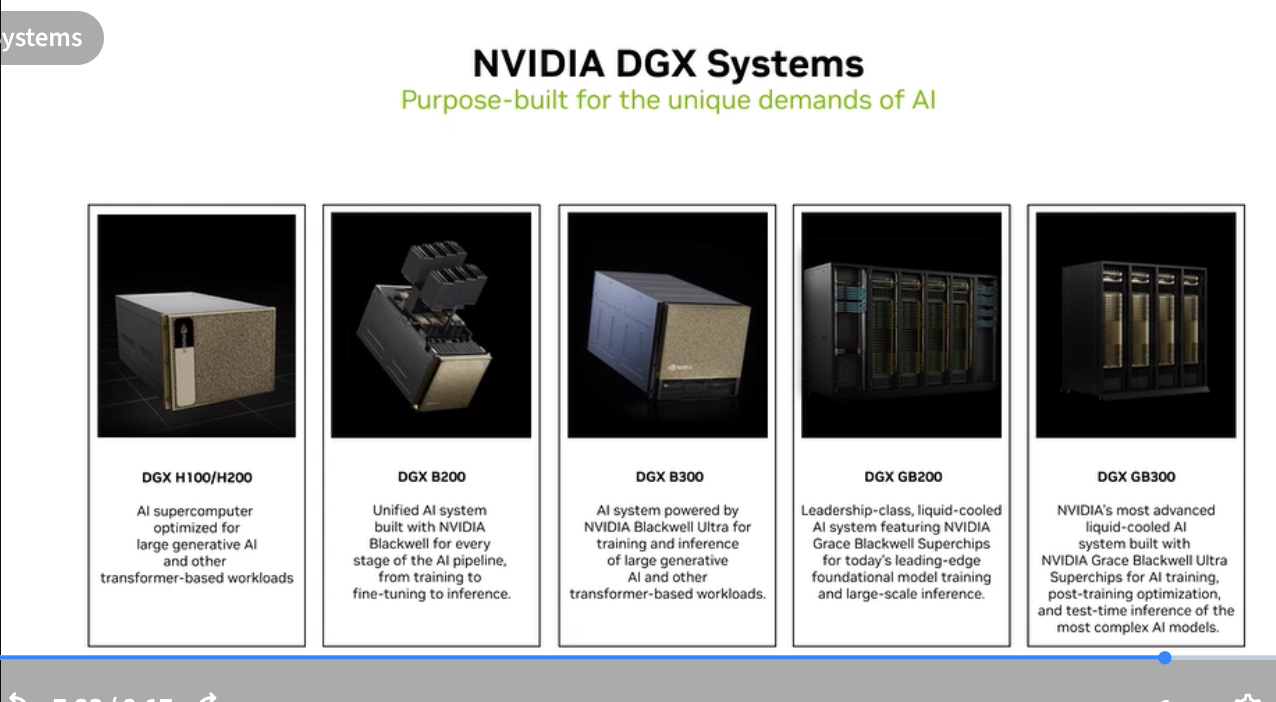
| System | GPUs | GPU Memory | Key use |
|---|---|---|---|
| DGX H100 | 8× H100 SXM5 80GB | 640 GB | LLM training, data analytics |
| DGX B200 | 8× B200 SXM | 1.4 TB+ | Next-gen generative AI |
| DGX B300 | 8× B300 SXM | ~1.6 TB | Blackwell Ultra, highest AI throughput |
| GB300 NVL72 | 72× Blackwell Ultra + 36× Grace | ~13 TB | Largest AI reasoning at rack scale |
DGX H100 internals
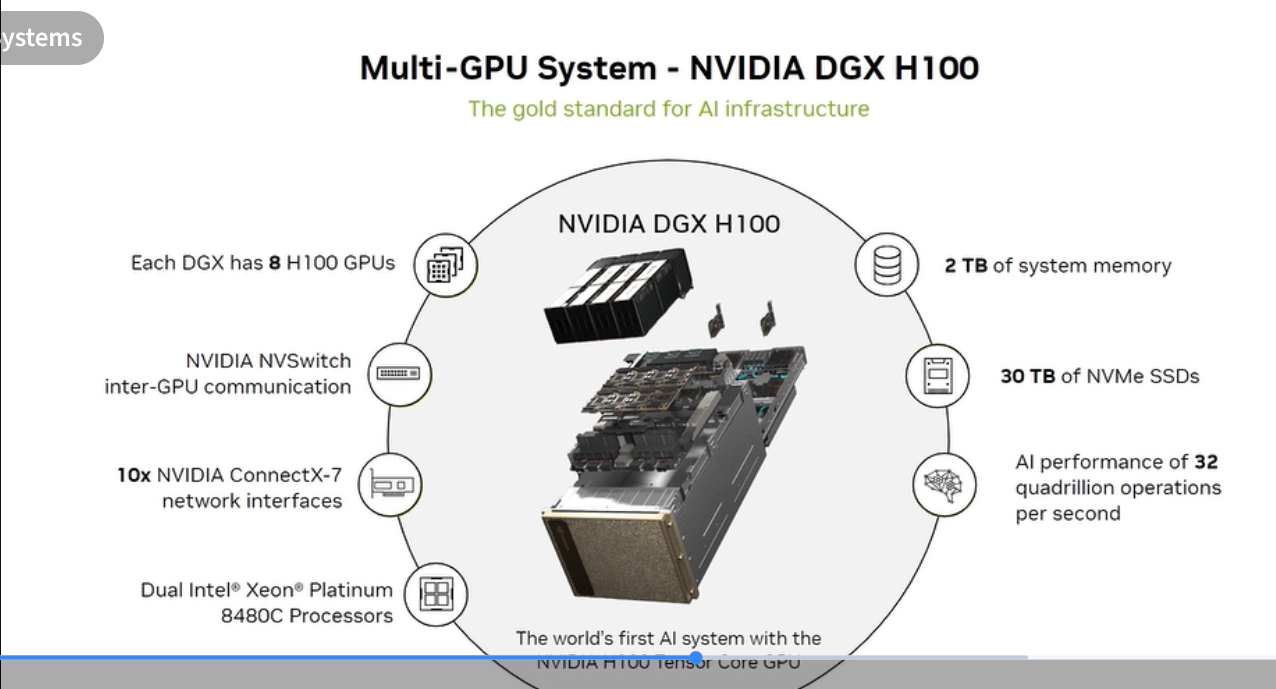
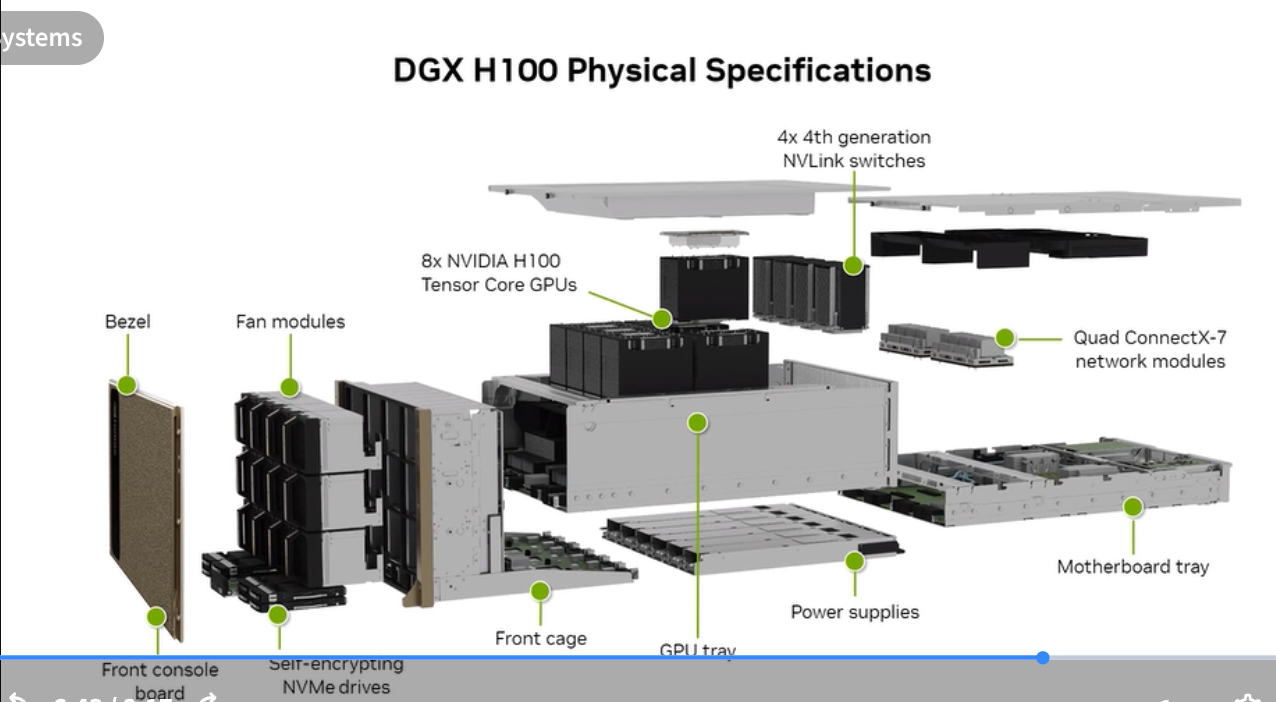
- 8× H100 SXM5 Tensor Core GPUs
- 4× NVSwitch (all-to-all 900 GB/s between GPUs)
- 2 TB system memory
- 30 TB NVMe storage (for checkpoints, local datasets)
- 8× ConnectX-7 400 Gbps InfiniBand NICs
- 2× Intel Xeon Platinum 8480C CPUs
- Physical: 10U rack unit
GB300 NVL72: Rack-scale AI
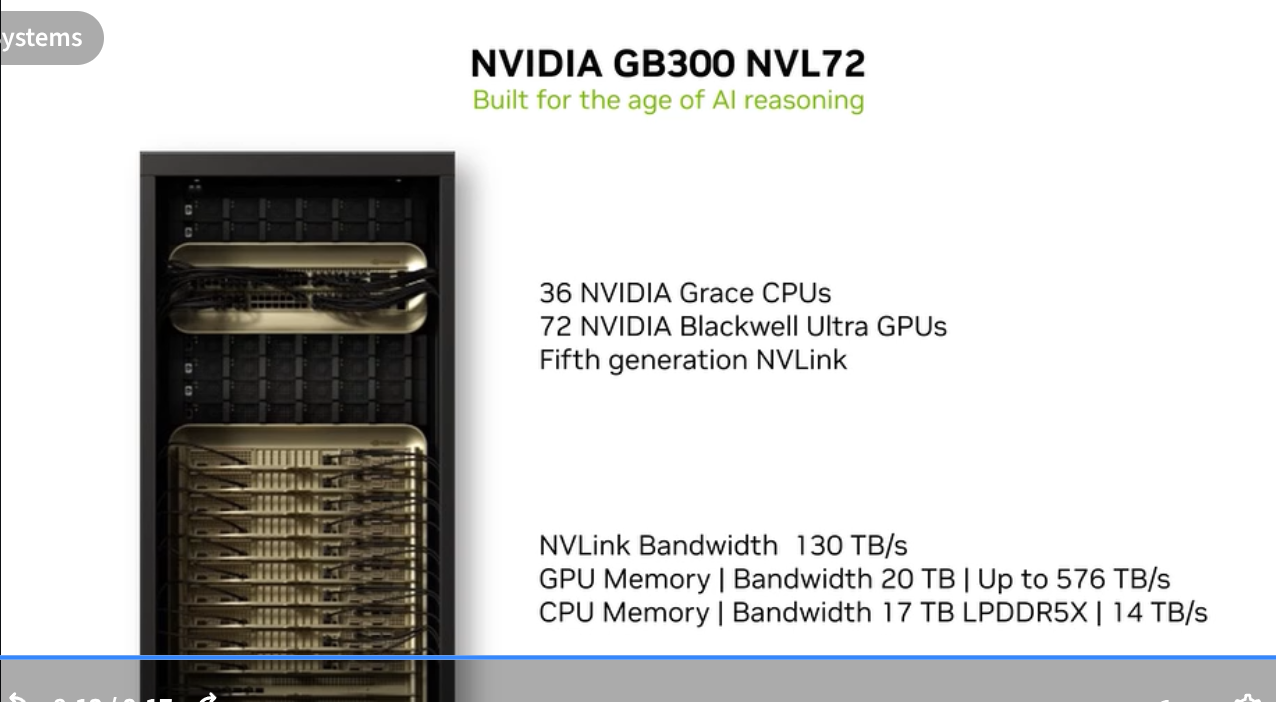
NVIDIA’s most advanced AI system — an entire rack as a single computing unit:
- 72 NVIDIA Blackwell Ultra GPUs (B300)
- 36 NVIDIA Grace CPUs
- 5th generation NVLink across the entire rack
- NVLink Bandwidth: 130 TB/s total
- GPU Memory: 20 TB total (576 TB/s bandwidth)
- CPU Memory: 14 TB LPDDR5X
Storage components
Deciding on storage
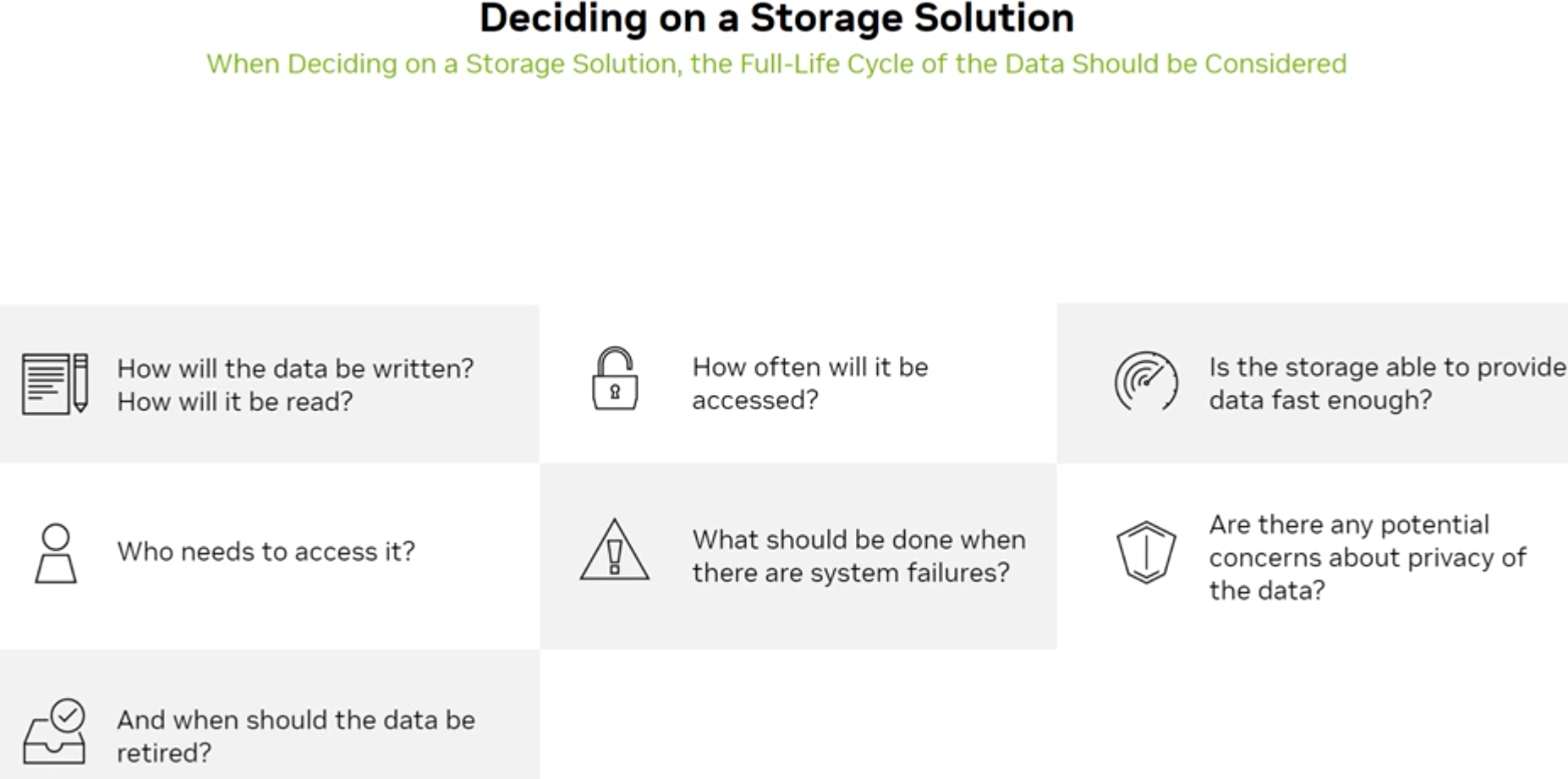
When choosing storage for an AI cluster, consider:
- How will data be written? How will it be read?
- How often will it be accessed?
- Can the storage provide data fast enough?
- Who needs to access it?
- What should happen during system failures?
- When should data be retired?
Storage hierarchy
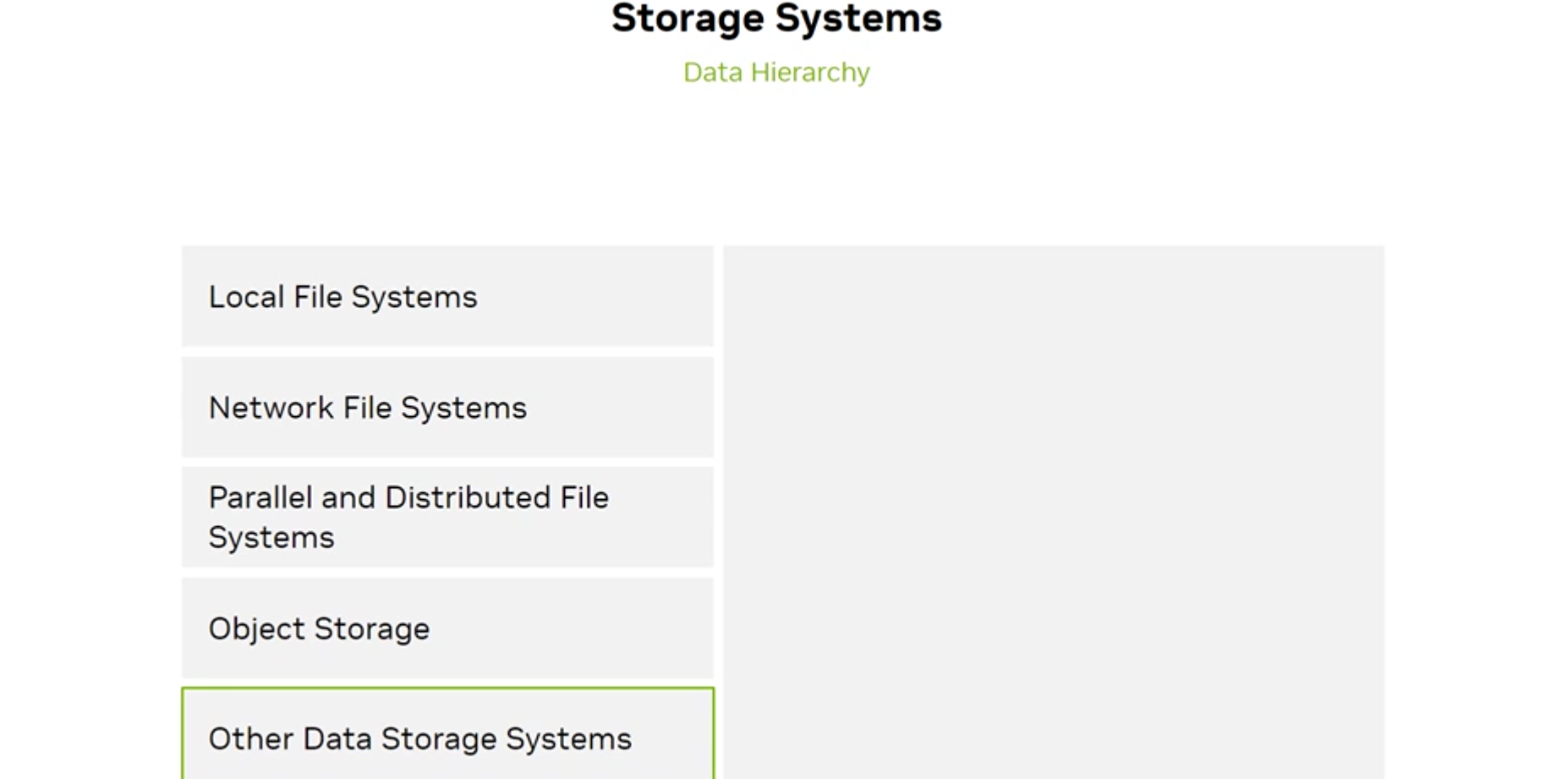
| Tier | Type | Characteristics |
|---|---|---|
| Local NVMe | Per-node SSD | Highest IOPS/bandwidth; private to one node; used for checkpoints, tmp |
| Network File System (NFS) | Shared via NAS/network | Simple; moderate bandwidth; good for small datasets, code, configs |
| Parallel/Distributed FS | Lustre, GPFS, WEKA | Scales to thousands of clients simultaneously; high throughput for training data |
| Object Storage | S3-compatible | Cheapest $/TB; unlimited scale; low IOPS; ideal for datasets archive, model artifacts |
| Other | HCI, tape archive | Special purpose |
Network File Systems
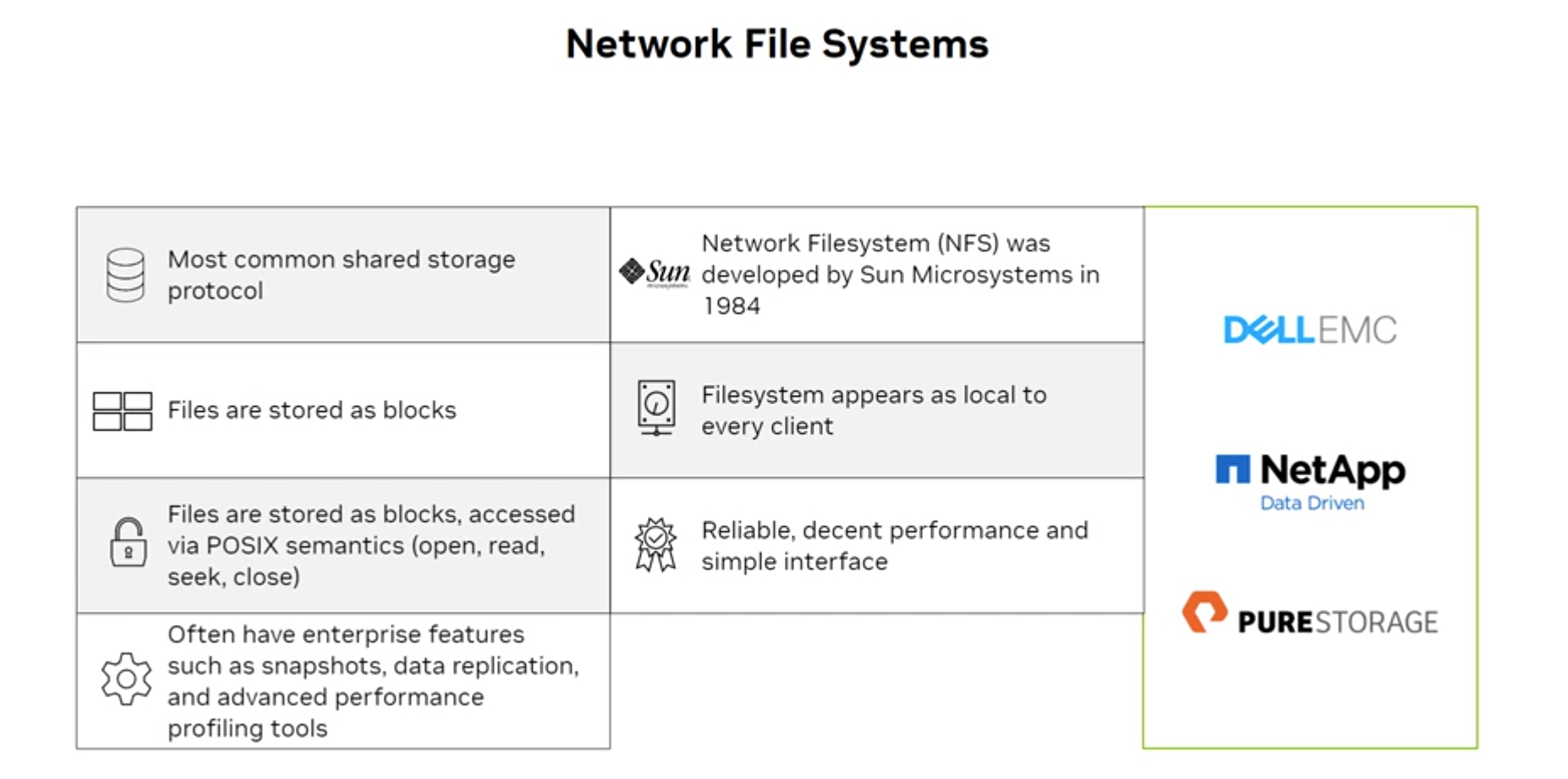
NFS (Network File System):
- Most common shared storage protocol
- Developed by Sun Microsystems in 1984
- Files stored as blocks; filesystem appears local to every client
- Reliable performance; simple interface
- Supports enterprise features: snapshots, data replication, performance profiling
- Key vendors: Dell EMC, NetApp, Pure Storage
For training workloads: Parallel file systems (Lustre, GPFS, WEKA) are preferred — NFS becomes a bottleneck when hundreds of GPUs simultaneously read training batches.
Networking components
Two distinct networks in an AI cluster:
| Network | Direction | Purpose | Technology |
|---|---|---|---|
| AI Fabric (E-W) | East-West | GPU-to-GPU gradient exchange during training | InfiniBand NDR/HDR or RoCE |
| Management/User Network (N-S) | North-South | Users accessing cluster, control plane, internet | Ethernet (10/25/100G) |
See 2.7 Networking Requirements and 2.9 High-Speed Options for full detail.
CPU nodes (host servers)
Each compute node needs a CPU host to:
- Run the OS and system software
- Manage I/O, PCIe bus, NVMe storage
- Run pre/post-processing that doesn’t fit on GPU
- Host the job scheduler daemon (Slurm agent, Kubernetes kubelet)
NVIDIA options:
- Intel Xeon (DGX H100 uses dual Xeon Platinum 8480C)
- AMD EPYC (NVIDIA-Certified Servers from Dell, HPE, etc.)
- NVIDIA Grace (ARM-based; in Superchip configurations)
Self-check questions
- How many NVSwitch chips does the DGX H100 contain, and what do they provide?
- For training on a 500-node cluster with simultaneous data reads, which storage type is required?
- What is the difference between E-W and N-S traffic in an AI cluster?
- How many GPUs does the GB300 NVL72 contain?
- Which three vendors are cited in the NFS slide as storage providers?
Answers
1. 4× NVSwitch chips. They provide a fully non-blocking all-to-all NVLink fabric, enabling any GPU to communicate with any other GPU at full 900 GB/s bandwidth simultaneously.2. Parallel/distributed file system (Lustre, GPFS, WEKA) — scales to thousands of simultaneous clients with high aggregate throughput. NFS would bottleneck.
3. E-W (East-West): traffic between servers in the same cluster — GPU-to-GPU gradient communication during training. Very high bandwidth required (InfiniBand/RoCE). N-S (North-South): traffic between users/internet and the cluster — management, job submission, result retrieval. Standard Ethernet.
4. 72 Blackwell Ultra GPUs (plus 36 Grace CPUs).
5. Dell EMC, NetApp, Pure Storage.